 US30SIGNALS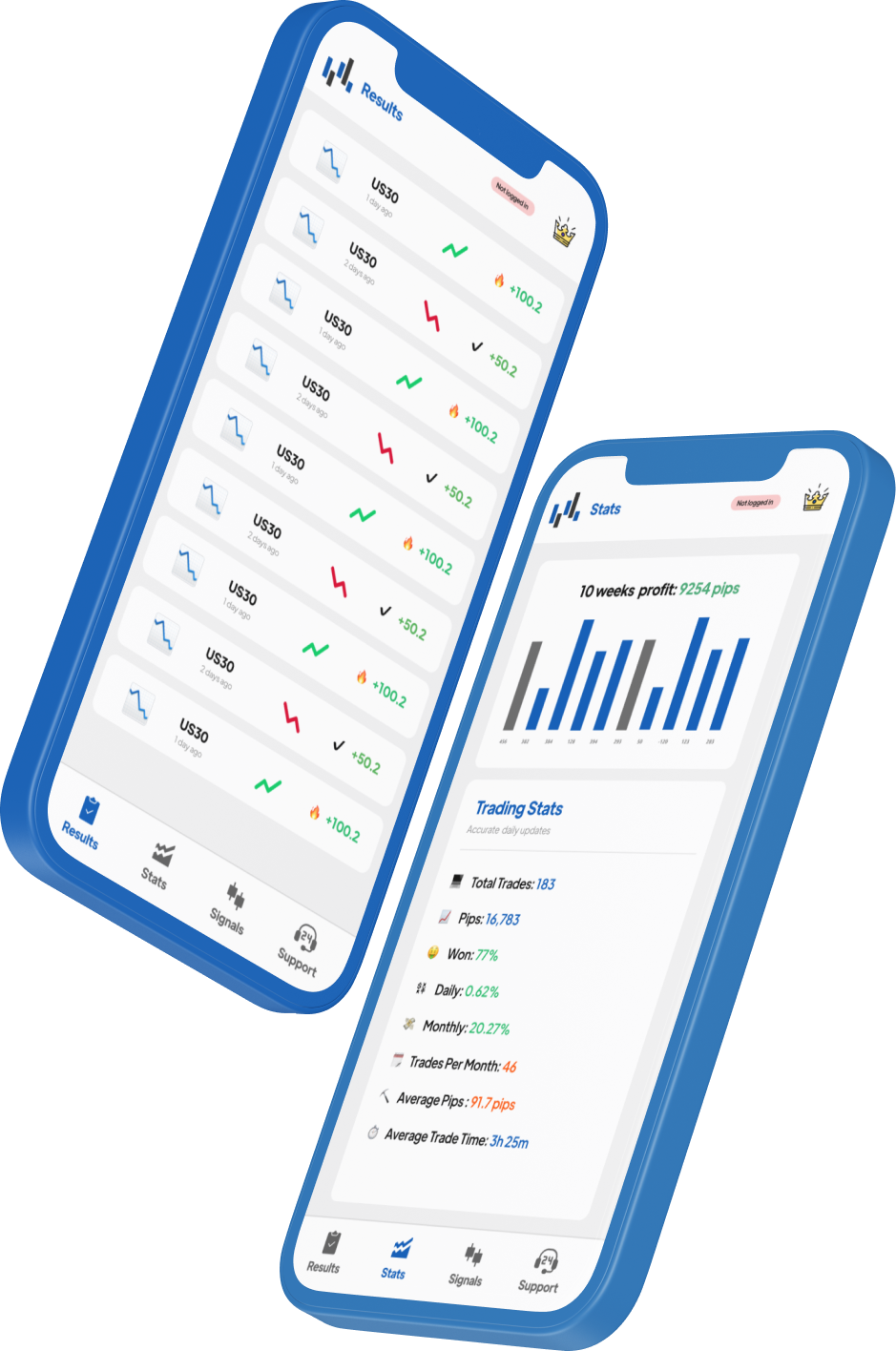
US30 trading signals are real-time trade alerts that specify exact entry price, stop-loss, and take-profit levels for US30 index positions. US30Signals delivers 4–8 us30 signals per trading day with a verified 93% accuracy rate across 17,000+ active traders since 2018. Powered by AI pattern recognition — see how US30Signals' AI generates US30 signals. All signals are delivered via push notification to iOS and Android in under one second.
What are us30 trading signals?
US30 signals explained
US30 signals are trade alerts that tell you when and how to trade US30 (the US30 index). A quality signal includes: entry price, stop-loss, and at least one take-profit level. US30Signals includes three TP levels plus live trade management updates on every alert.
What you receive
- Exact entry price or range
- Pre-calculated stop-loss
- Three take-profit targets (TP1/TP2/TP3)
- Suggested lot size for your account
- Live management — SL adjustments, partial close alerts
Why traders choose our us30 signals.
Watch US30Signals in action.
See how traders receive and execute us30 signals in real time.
How to use us30 signals in 4 steps.
Download the app
Get US30Signals free on iOS or Android. Takes 30 seconds.
Enable notifications
Allow push notifications so signals reach you the instant they fire.
Receive the signal
Entry, SL, and TP levels arrive on your screen within 1 second.
Place the trade
Copy the levels into your broker. Most traders execute in under 60 seconds.
US30 at a glance.
A US30 signal breakdown.
The signal
The outcome
Every way to trade the Dow.
| Feature | US30 CFD | YM Futures | MYM Micros | DIA ETF |
|---|---|---|---|---|
| Point value | Varies by broker | $5/pt | $0.50/pt | $1/share |
| Min account | $100–500 | ~$5,000 | ~$500 | ~$400 |
| Exchange | Broker (OTC) | CME | CME | NYSE |
| Trading hours | Broker hours | 23h/day | 23h/day | 9:30–16:00 ET |
| IRA eligible? | No | No | No | Yes |
| Best for | Forex traders | Experienced traders | Smaller accounts | Stock traders |
| See signals | /us30-signals | /ym-signals | /mym-signals | /dia-signals |
Types of us30 signals we send.
Intraday Signals
Short-term trades that open and close within the same session (1–8 hours).
- Tight stop-losses (20–50 points)
- Quick execution required
- 3–6 signals per session
- Best for active traders
Swing Signals
Multi-day positions catching larger moves (1–5 days).
- Wider stop-losses (80–200 points)
- No rush to execute
- 1–2 signals per week
- Best for busy traders
US30 signals for traders everywhere.
Preview live signals before committing.
Browse our full signal archive — 1000+ timestamped US30 trades with exact entry, SL, TP, and result. Verify our 93% accuracy yourself before downloading.
- → Full signal history with timestamps
- → Entry, SL, TP1/TP2/TP3 on every trade
- → Win/loss visible — no deletions
- → Filter by date, direction, pip result
US30 trading questions, answered.
What does the US30 price track? +
US30 commonly labels a broker's CFD linked to the Dow Jones Industrial Average. The index is measured in points. Broker CFDs, the cash index and YM or MYM futures can quote different levels, especially outside the US cash session.
How accurate are US30Signals signals? +
US30Signals maintains a 93% win rate calculated across all closed US30 trades since 2018. This is verified publicly — every signal, win or loss, is timestamped and logged in the app. The average winning trade captures 91.7 points, with an average trade duration of 3 hours 25 minutes. We publish 4–8 signals per trading day.
What does a US30 trading signal include? +
Every US30Signals signal includes: exact entry price or range, stop-loss level, three take-profit targets (TP1, TP2, TP3), suggested position size based on 1% risk, and the trade direction (BUY or SELL). After entry, we send live management updates — SL adjustments, partial close instructions, and "move to breakeven" alerts.
What moves the Dow Jones (US30) price? +
The Dow Jones reflects the share prices of its constituent companies. Company earnings, interest-rate expectations, economic releases and sector developments can change the index. As a price-weighted index, it is constructed differently from the Nasdaq-100.
How much capital do I need to trade US30? +
The amount of capital needed depends on the product, minimum position size, margin requirement and chosen stop distance. Calculate cash exposure from the actual contract specification and account currency. There is no universal starting balance that suits every broker or trading plan.
Which broker should I use for US30/Dow Jones trading? +
Use a broker that supports your exact instrument and account jurisdiction. Compare its contract size, quote currency, spread, execution platform and trading hours. The app provides analysis and alerts; the broker handles trade execution.
What is the best time to trade US30 (Dow Jones)? +
Active periods depend on the instrument, trading venue and economic calendar. London and New York activity often overlap with major releases. Local session times shift relative to UTC during daylight saving, so use the session's named timezone rather than one year-round UTC window.
Is US30 trading risky? +
US30 risk depends on the point move, position size and dollar value per point. Dow futures and broker CFDs have different multipliers, margins and trading sessions; matching the symbol alone does not establish equal cash exposure.
Start receiving us30 signals.
Join 17,000+ traders. Free download, no card required.