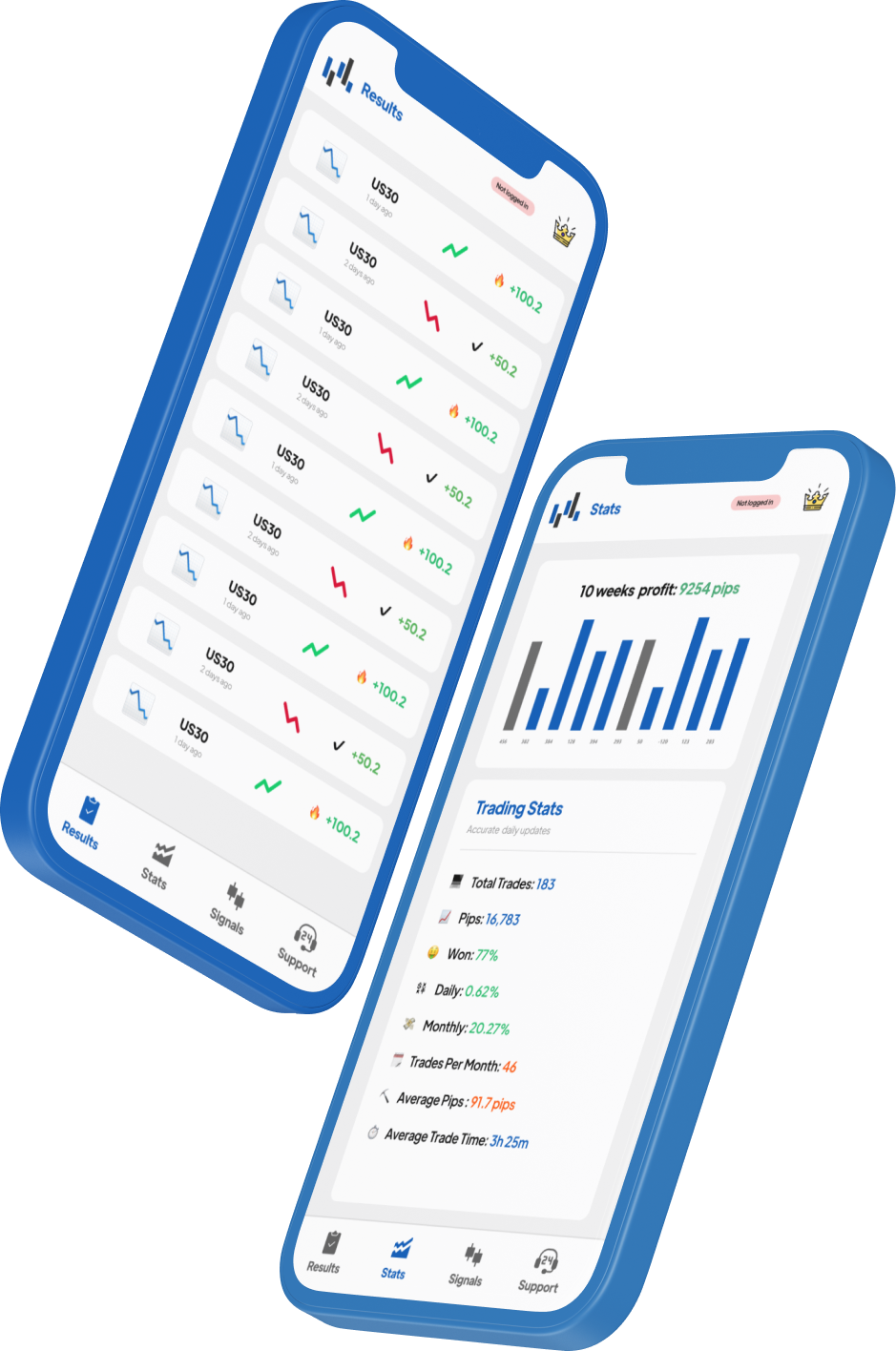
Why US30 is ideal for multiple strategies.
US30 works across multiple trading styles because it combines index liquidity, clear session structure, and sensitivity to scheduled catalysts. The best strategies focus on the US equity open, macro data, earnings sentiment, and sector rotation.
Strong trends. US30 frequently enters multi-week directional trends driven by Fed policy, earnings cycles, growth expectations, and risk sentiment. Trend followers focus on higher highs, higher lows, and pullbacks into moving averages.
High intraday volatility. With 200–500+ point daily ranges, US30 provides ample movement for scalpers and day traders to capture within a single session. Even during "quiet" days, US30 typically produces at least one 100+ point directional move.
Predictable catalysts. US30's price drivers are well-known and scheduled: US equity open, FOMC meetings, CPI, NFP, GDP, retail sales, and major Dow component earnings. News traders can prepare in advance for these volatility events.
Deep liquidity. US index futures and CFDs are heavily traded around the US cash session. Liquidity is strongest from pre-market through the regular US session, which is critical for scalping, breakout entries, and tight stop-loss execution.
Clear technical levels. US30 often reacts around round numbers, prior session highs/lows, opening ranges, VWAP, and major moving averages. This technical responsiveness makes chart-based strategies easier to structure.
Proven US30 strategies.
Each strategy has distinct characteristics suited to different trader profiles. Review all six, then choose one to master before adding others.
Trend Following
Identify the dominant trend direction using moving averages or price structure, then enter on pullbacks. Ride the trend until structure breaks.
Breakout Trading
Trade opening-range or pre-market breakouts after US equity liquidity comes in. False breaks are the main risk.
Scalping
Rapid-fire trades targeting small price movements. Requires ECN broker, fast execution, and intense focus. High win rate but small gains per trade.
Gap Trading
Trade gap fills or gap continuations after the regular US session opens. Best when pre-market news creates a clear imbalance.
News-Based Trading
Trade the volatility around scheduled events like NFP, CPI, and FOMC decisions. Requires understanding of consensus expectations and how US30 reacts to surprises.
Signal-Based Trading
Follow professional trade signals with exact entry, SL, and TP levels. Removes analysis burden. Ideal for beginners and those who can't watch charts all day.
Strategy breakdowns.
1. Trend Following
Trend following is the most consistently profitable strategy across all markets, and US30 is no exception. The premise is simple: identify the direction of the dominant trend and trade only in that direction. The hardest part isn't the concept — it's the patience to wait for pullbacks and the discipline to hold positions through normal retracements.
How it works on US30: Use the 50-period and 200-period moving averages on the H4 chart to identify the trend. When the 50 MA is above the 200 MA, only look for long setups. When it's below, only look for shorts. For entries, wait for price to pull back to the 50 MA or a previous resistance-turned-support level, then enter with a stop below the pullback low.
Entry criteria: (1) Clear trend established on H4 (higher highs and higher lows for uptrend). (2) Price pulls back to a support zone — the 50 MA, a previous breakout level, or a Fibonacci 38.2–61.8% retracement. (3) A bullish candlestick pattern (engulfing, pin bar, morning star) forms at the pullback level. (4) Enter on the close of the confirmation candle.
Stop-loss: Below the pullback swing low, typically 150–300 points depending on the pullback depth. Take-profit: Trail the stop using the 50 MA or structure (move stop below each new higher low). Target 1:2 minimum, but trend trades can run 1:5 or more when the trend is strong.
Why it works: US30 trends can persist when earnings momentum, Fed expectations, and risk sentiment align. The strongest runs usually provide repeated pullback entries around VWAP, prior highs, or moving averages, each offering defined risk and clear invalidation.
2. Breakout Trading
Breakout trading captures the fast moves that occur when US30 breaks out of a pre-market range, opening range, or multi-hour consolidation. The US cash open is especially important because volume expands sharply once equities start trading.
How it works on US30: Mark the pre-market high/low, the first 15-30 minute opening range, and the prior day high/low. Trade a confirmed break when volume expands and sector breadth supports the direction.
Entry criteria: (1) Identify a range with at least 3 touches of support and resistance. (2) Wait for a candle to close decisively outside the range (not just wick through). (3) Enter on the close or on a retest of the broken level. (4) Volume should confirm — increased volume on the breakout candle adds conviction.
Stop-loss: Inside the range, typically at the midpoint or opposite boundary. 50–150 points depending on range width. Take-profit: Measure the range height and project it from the breakout point. A 100-point range suggests a 100-point minimum target beyond the breakout level.
The main risk: False breakouts. US30 will sometimes break above resistance, trigger breakout entries, then reverse back into the range. To reduce false breakout risk: (1) Wait for a candle close, not just a wick. (2) Trade breakouts in the direction of the higher-timeframe trend. (3) Require above-average volume on the breakout candle.
3. Scalping
Scalping involves taking many quick trades targeting small price movements — typically 20–60 points on US30. Scalpers may take 10–30 trades per session, holding each for seconds to minutes. It's the most demanding strategy in terms of focus, execution speed, and emotional control.
How it works on US30: Trade the M1 or M5 chart during US pre-market and the regular session open, especially 14:30-16:00 UTC. Use VWAP, the 9/21 EMA, and prior session levels to identify micro-trends and quick reversals.
Entry criteria: (1) 9 EMA crosses 21 EMA on M1/M5. (2) RSI confirms direction (above 50 for longs, below 50 for shorts). (3) Price is moving with momentum (not chopping). (4) Spread is at or below normal levels (no widened spreads).
Stop-loss: 15–40 points, always placed immediately on entry. Take-profit: 20–60 points, or close manually when momentum stalls. Risk-to-reward of 1:1 to 1:1.5 is normal for scalping — profitability comes from the higher win rate (55–65%).
Requirements: A broker with tight US30 index spreads, reliable execution during the US open, and stable order handling around news. Scalping also requires fast decision-making and strict daily loss limits.
4. Gap Trading
Gap trading focuses on the difference between the prior regular-session close and the current pre-market or cash-open price. US30 gaps often form after earnings, CPI, Fed headlines, or overnight futures moves.
How it works on US30: Mark the prior day close, pre-market high/low, and opening print. If the gap is unsupported by breadth or news, look for a gap-fill trade. If the gap has strong catalyst support, trade continuation after the opening range confirms.
Entry criteria: (1) Price reaches a major support/resistance zone identified on Daily/Weekly. (2) A reversal pattern forms on H4 — engulfing candle, double bottom/top, or divergence on RSI/MACD. (3) Enter on the close of the reversal signal candle. (4) The setup should offer minimum 1:2 risk-to-reward.
Stop-loss: 80–200 points beyond the opening range or invalidation level. Take-profit: Prior close for gap-fill trades, or the next intraday liquidity level for continuation trades.
Main risk: The first few minutes after the open can whipsaw violently. Wait for the opening range to form, then trade the confirmed direction instead of guessing the gap reaction at the bell.
5. News-Based Trading
News trading exploits the volatility spikes that occur around major economic data releases. US30 is one of the most news-sensitive instruments, reacting aggressively to US economic data that affects interest rate expectations, inflation, and the dollar.
Key events for US30:
- FOMC decisions (8x/year) — The biggest US30-moving events. Rate changes, dot plot revisions, and Powell's press conference can move US30 150–400 points (300–800 points).
- Non-Farm Payrolls (monthly) — Employment data that shifts rate expectations. Strong NFP = dollar up, US30 down. Weak NFP = dollar down, US30 up.
- CPI / Inflation data (monthly) — Directly impacts inflation hedging demand and rate expectations.
- Dow component earnings (quarterly) — Large earnings surprises from major index names can move US30 hundreds of points as sector sentiment reprices.
Approach 1 — Straddle: Place a buy stop above the pre-news range and a sell stop below it. Whichever direction US30 breaks, one order triggers. Cancel the other. This captures the initial spike regardless of direction. The risk is a whipsaw where both stops get hit.
Approach 2 — Fade the spike: Wait 5–15 minutes after the data release. The initial spike often overshoots and retraces 30–50% within the first hour. Enter in the direction of the initial move after the retracement. This gives you a better entry but risks missing the move entirely if it doesn't retrace.
Stop-loss: 50–200 points, depending on the event's typical volatility impact. Take-profit: 100–500 points. FOMC trades can run 500+ points over 24–48 hours as the market digests the decision.
6. Signal-Based Trading
Signal-based trading is the most accessible strategy for two reasons: it requires no technical or fundamental analysis skill, and it provides exact execution levels. A professional analyst does the work; you execute the trade. This approach is particularly effective for beginners, part-time traders, and anyone who wants exposure to US30 without dedicating hours to chart analysis.
How it works: You subscribe to a signal provider (like US30Signals) and receive trade alerts with exact entry price, stop-loss, and take-profit levels. When a signal fires, you open your broker platform, navigate to US30, and place the order with the provided levels. Total execution time: 15–30 seconds per trade.
Why it works: Professional signal providers combine technical analysis, fundamental context, and pattern recognition to identify high-probability setups. US30Signals's 93% accuracy rate means the vast majority of trades reach their take-profit target. Each signal includes risk management by default — you're never left guessing about stop-loss placement.
What you still need to do: Calculate your lot size based on the signal's stop-loss distance and your account's 1% risk. Execute the trade promptly when the signal fires — delayed entries reduce accuracy. Follow the signal exactly as given — don't modify the SL or TP levels.
Best for: Beginners who are still learning. Full-time workers who can't monitor charts. Experienced traders who want a secondary income stream with minimal time investment. Prop firm traders who need consistent results to maintain funded status.
Best strategy for beginners.
If you're new to US30 trading, start with signal-based trading. Here's the reasoning:
Every other strategy requires skills that take months to develop — reading charts, identifying patterns, understanding macro drivers, managing emotions during live trades. While you're building those skills, a signal-based approach lets you participate in the market with proven trade setups, learn from real trades, and build your account (or at least protect it from the beginner mistakes that destroy most new accounts).
Think of it as training wheels for US30 trading. Each signal you execute is a lesson in how professional traders think:
- You learn where experienced traders place entries (at key levels, not random spots)
- You learn where they put stop-losses (at structural invalidation points, not arbitrary distances)
- You learn where they target profits (at logical resistance/support, with favorable R:R)
- You build muscle memory for position sizing and order execution
- You experience real market psychology — handling wins and losses with real money
After 2–3 months of signal-based trading, you'll have enough market experience to begin learning technical analysis and developing your own edge. Many traders continue using signals as one component of their approach even after becoming experienced — the two aren't mutually exclusive.
Strategy comparison table.
| Strategy | Screen Time | Trades/Week | Skill Level | Stress Level |
|---|---|---|---|---|
| Trend Following | 1–2 hrs/day | 3–8 | Intermediate | Low-Medium |
| Breakout | 2–4 hrs/day | 5–15 | Intermediate | Medium |
| Scalping | 3–5 hrs/day | 50–150 | Advanced | Very High |
| Gap Trading | 1–2 hrs/day | 3–8 | Intermediate | Medium-High |
| News-Based | Event-specific | 4–8 | Advanced | High |
| Signal-Based | 5–15 min/day | 5–15 | Beginner | Low |
Strategies in action.
Watch professional US30 trading strategies executed with US30Signals signals.
Frequently asked questions.
What is the best strategy for trading US30?
There's no universally "best" strategy. For beginners, signal-based trading is most effective because it removes the analysis burden while providing real market experience. For experienced traders with time to watch charts, trend following on H1-H4 timeframes offers the best balance of risk-to-reward and win rate. The key is mastering one strategy thoroughly before adding complexity.
Can you scalp US30?
Absolutely. US30 is one of the best instruments for scalping due to its liquidity, active US equity session, and large intraday ranges. The M1-M5 timeframes around the US open provide frequent scalping opportunities. However, scalping requires tight spreads, fast execution, and the ability to make rapid decisions under pressure. Start with longer timeframes first.
What timeframe should I use for US30?
The H1 (1-hour) chart is the most versatile for US30 trading — detailed enough for precise entries but smooth enough to filter noise. Use the H4 or Daily for trend direction and the M15 for entry timing. Multi-timeframe analysis (analyze on H4, decide on H1, enter on M15) is the professional standard. Scalpers use M1-M5. Swing traders use H4-Daily.
How many points does US30 move per day?
US30 typically moves 200–500 points per day, measured from the daily low to the daily high. On high-impact news days (NFP, FOMC, CPI), ranges can exceed 800–1,000 points. During quiet periods (Asian session, holiday weeks), ranges may contract to 80–150 points. These wide ranges are what make US30 attractive — there's almost always enough movement for any strategy.
Explore more resources.
What is US30?
Complete beginner's guide to US30 trading basics.
Read more →Risk Management
Protect your capital: position sizing, SL, and the 1% rule.
Read more →Best Brokers
Compare top brokers for executing your US30 strategy.
Read more →US30 Trading Glossary
A–Z dictionary of trading terminology.
Read more →US30 Signals
Professional signal-based trading — 93% accuracy.
Read more →Live US30 Price
Real-time US30 chart with support and resistance.
Read more →Execute strategies with precision.
Professional US30 signals with exact entry, SL, and TP levels. Free to download.